


How EDR Killers Bypass Security Tools
By 0xSnow on March 19, 2026


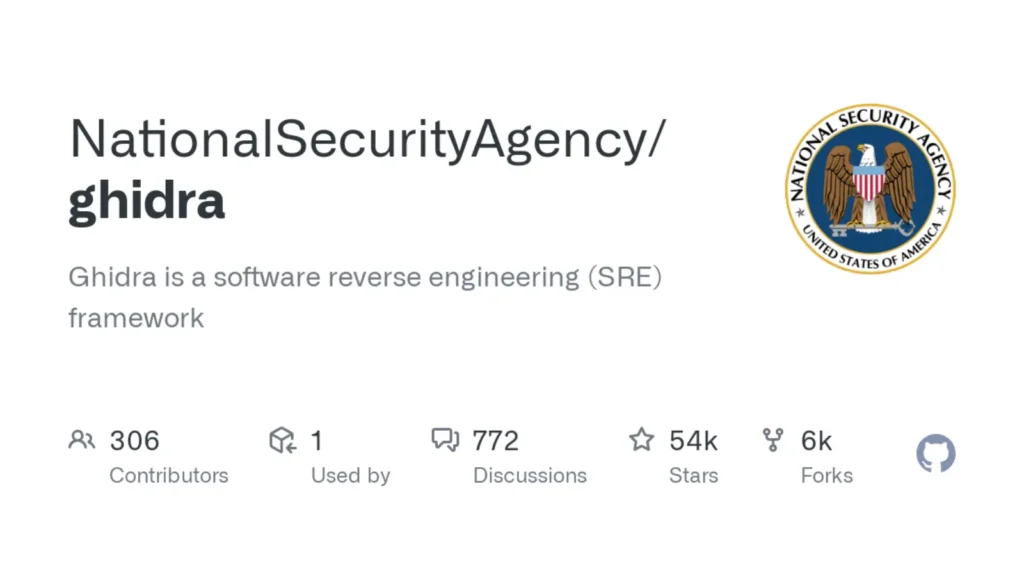
Ghidra is an open-source Software Reverse Engineering (SRE) framework developed by the U.S. National Security Agency (NSA). It helps security researchers, malware analysts, and software developers examine compiled programs to understand their behavior without requiring access to the original source code.
Available for Windows, Linux, and macOS, Ghidra combines disassembly, decompilation, graphing, debugging, emulation, and scripting in one environment. Its broad processor and executable-format support makes it useful for investigating suspicious binaries, analyzing software vulnerabilities, and researching unfamiliar applications.
Ghidra translates machine instructions into assembly language and can reconstruct a high-level representation of a program’s logic through its decompiler. Analysts can inspect functions, variables, strings, cross-references, and control flow to understand how a binary operates.
This functionality is particularly valuable for examining suspicious executables, locating potentially unsafe operations, and identifying how software handles user input or sensitive data.
Ghidra supports a wide range of processor instruction sets and executable formats. This allows analysts to investigate software built for different operating systems and hardware platforms without switching between multiple reverse engineering tools.
Developers can extend Ghidra using Java and Python scripts, custom analyzers, and extensions. Automation is useful for repetitive tasks such as extracting strings, identifying function patterns, comparing program structures, or processing multiple binaries.
Ghidra also supports PyGhidra, which provides a Python interface for interacting with Ghidra functionality and integrating analysis into custom workflows.
Ghidra’s multi-user project capabilities support collaboration on larger reverse engineering investigations. Teams can share project data, coordinate analysis, and maintain a common view of functions, symbols, and other findings.
The framework includes debugging capabilities and a p-code emulation system for supported analysis workflows. These features help researchers investigate program execution, inspect state changes, and test hypotheses about binary behavior. Available debugging features depend on the target platform and its configuration.
The official Ghidra distribution is provided as a compressed archive rather than a traditional installer. Before installation, check the current release’s system requirements. Recent releases require a compatible 64-bit Java Development Kit (JDK), and the required Java version can change between releases.
Download the appropriate release archive from the official Ghidra releases page. After downloading it, extract the archive and enter the resulting directory.
unzip ghidra___.zip
cd ghidra___
./ghidraRun
Replace the archive and directory placeholders with the actual downloaded filename and extracted directory name. If the launcher cannot find a compatible JDK, install the version specified in the release documentation and verify your Java environment.
After launching Ghidra, create a project and import a binary that you are authorized to examine. The following workflow provides a starting point for static analysis:
For network-facing software, combine binary analysis with authorized service discovery using tools such as Nmap. Network scanning and reverse engineering provide different kinds of evidence and should be treated as complementary techniques.
For current installation requirements, supported formats, scripting guidance, and security advisories, consult the official Ghidra repository and its release documentation. Download Ghidra from trusted official sources and analyze unknown binaries in an isolated environment.
Ghidra provides a comprehensive environment for understanding compiled software. Its decompiler, architecture support, automation features, and debugging tools make it a valuable resource for legitimate reverse engineering, malware research, and software security assessments.


