How EDR Killers Bypass Security Tools
By 0xSnow on March 19, 2026


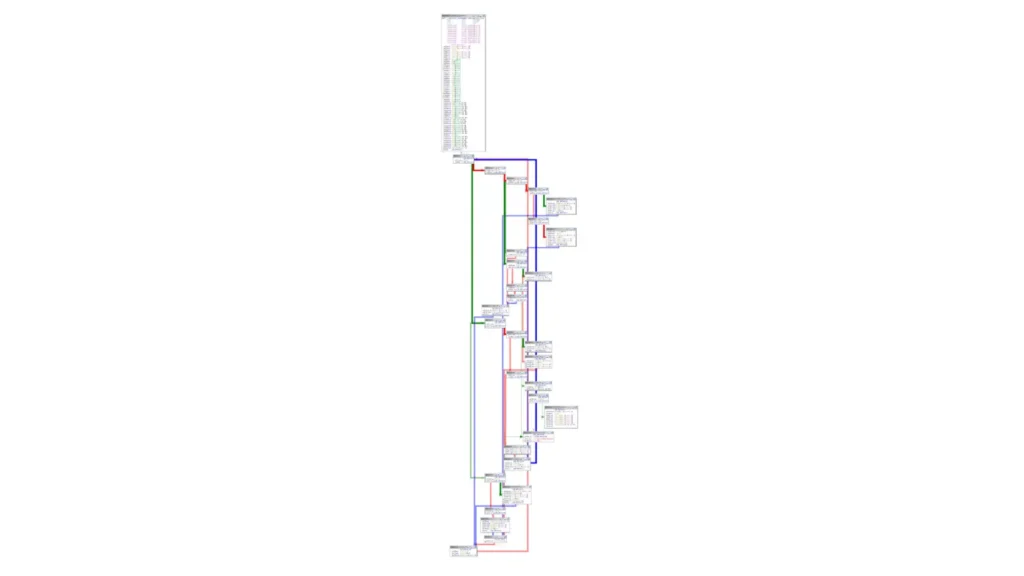
Malware analysts and reverse engineers frequently encounter Control Flow Flattening (CFF) when analyzing binaries protected by the Obfuscator-LLVM (OLLVM) framework. CFF destroys the original program logic by breaking basic blocks apart and placing them inside a massive, state-driven switch statement. This transformation makes traditional static analysis incredibly tedious and complex. ollvm-unflattener addresses this exact challenge by providing a systematic, Python-based approach to reconstructing original control flow graphs. Security researchers who regularly utilize terminal environments, such as those detailed in our Kali Linux commands cheat sheet, can integrate this tool directly into their automated analysis pipelines to save countless hours of manual labor.
Maintained on the official ollvm-unflattener GitHub repository, the tool leverages the Miasm framework to perform symbolic execution on the obfuscated binary. Unlike static pattern-matching scripts that break when OLLVM updates its compiler passes, ollvm-unflattener dynamically evaluates state transitions.
The tool tracks the specific state variable that dictates which block executes next, identifies the central dispatch mechanism, and maps the true mathematical relationships between the flattened blocks. Once the logical relationships are successfully recovered, the tool patches the binary natively, replacing the complex state-driven transitions with direct block connections and simplified conditional branches.
The tool stands out in the deobfuscation ecosystem by offering highly specialized capabilities tailored for control flow restoration:
--all flag, analysts can trigger a breadth-first search (BFS) to recursively deobfuscate related function calls automatically.Because the tool relies heavily on Miasm and Python cryptography libraries, installation requires cloning the repository and installing the dependencies through the Python Package Installer (pip). Execute the following commands in your terminal:
git clone https://github.com/cdong1012/ollvm-unflattener.git
cd ollvm-unflattener
pip install -r requirements.txt
Reversing control flow flattening with this tool requires a structured operational approach. You must first identify the starting address of the obfuscated function before initiating the symbolic execution engine.
-t parameter.While highly effective, analysts must understand the tool’s current architectural boundaries. The framework focuses exclusively on the x86 architecture and is heavily tested against Linux ELF binaries. Reversing ARM or x64 binaries requires manual source code modifications to the underlying Miasm symbolic execution engine parameters.
During testing against single-layer OLLVM flattening, the tool demonstrated an 83% success rate. However, extreme multi-layered obfuscations or heavy virtualization passes will still require manual intervention. Future development roadmaps indicate planned support for native IDA Pro integration and expanded architecture compatibility, making this an essential and evolving utility for modern reverse engineering toolkits.