

How EDR Killers Bypass Security Tools
By 0xSnow on March 19, 2026


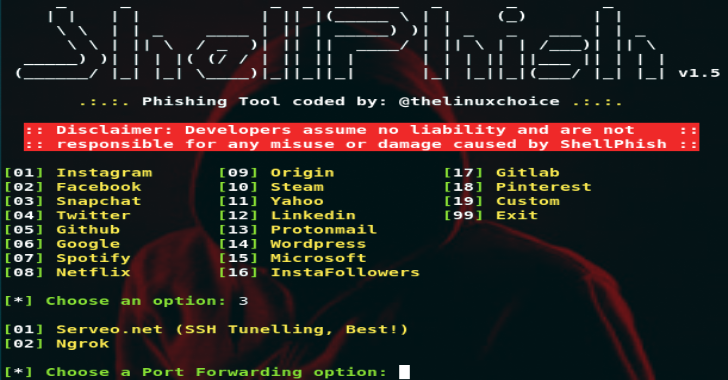
ShellPhish is a legacy, command-line phishing simulation toolkit created to demonstrate how convincing login-page imitations can be used in social engineering attacks. The project was designed around templates representing 18 online services, including Instagram, Facebook, Snapchat, GitHub, Twitter, Yahoo, Proton Mail, Spotify, Netflix, LinkedIn, WordPress, Steam, Microsoft, GitLab, and Pinterest.
For security professionals, ShellPhish provides a historical example of how phishing kits imitate familiar online services. Its approach also highlights why users should verify login URLs, avoid unfamiliar links, and use multi-factor authentication to protect their accounts.
The original project listed templates for a range of popular platforms and services. These included social networks, email providers, entertainment platforms, developer services, and gaming accounts.
The variety of services illustrates a common phishing technique: copying the appearance of a familiar login experience to make a fraudulent page seem trustworthy. The visual similarity does not make a page legitimate. Users should always check the domain and authentication flow before entering account information.

ShellPhish was distributed as a Bash-based project hosted on GitHub. Its original documentation described a terminal-driven workflow. However, the toolkit is associated with credential-harvesting phishing techniques, so this article does not reproduce commands for launching phishing pages or collecting credentials.
Researchers examining the legacy project should treat its source code as untrusted. Review it in an isolated environment, avoid exposing real accounts or credentials, and do not deploy imitation login pages against public services or unsuspecting users.
ShellPhish demonstrates several risks that remain relevant to modern account security:
For additional security research, see VTHunting, a script for generating reports about VirusTotal hunting.
The original ShellPhish repository is available at GitHub. It should be treated as a legacy project rather than assumed to be maintained, secure, or compatible with current systems.
Use phishing simulation tools only in controlled environments with explicit authorization from everyone responsible for the systems and accounts involved. Never use them to impersonate real services, collect credentials, or target people without informed consent. Unauthorized phishing activity may violate applicable laws and organizational policies.


