

How EDR Killers Bypass Security Tools
By 0xSnow on March 19, 2026


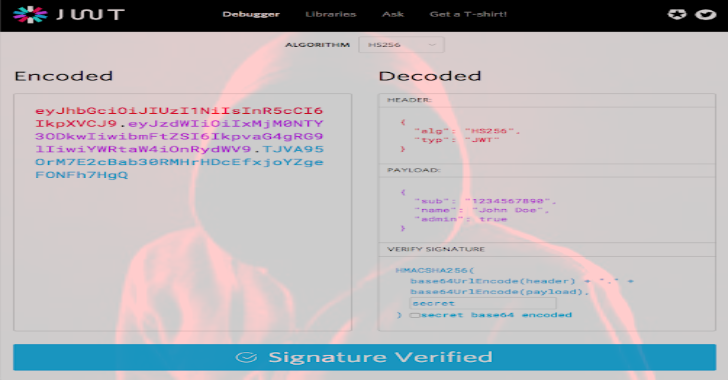
JWT Tool is an open-source Python toolkit for analyzing, testing, modifying, and validating JSON Web Tokens (JWTs). Security professionals use it to identify weak signing secrets, investigate signature-validation flaws, test token claims, and assess whether a web application accepts improperly constructed tokens.
JWTs commonly support authentication and authorization in web applications and APIs. However, insecure algorithm handling, weak secrets, and incorrect token validation can expose applications to authentication bypasses or privilege escalation. JWT Tool helps penetration testers investigate these weaknesses in authorized test environments.
JWT Tool provides several capabilities for examining token structure and testing how applications process signed tokens.
alg, typ, sub, exp, and role.These capabilities help testers determine whether a weakness exists in the application rather than simply identifying suspicious token contents. A successful test depends on the target’s JWT library, configuration, signing keys, and validation logic.
JWT Tool is intended primarily for penetration testers, application security engineers, and developers who need to evaluate JWT-based authentication. It is also useful for security training, capture-the-flag challenges, and controlled vulnerability research.
Developers can use it to verify that applications reject modified claims, enforce expiration, validate signatures, and accept only explicitly permitted algorithms. For broader web reconnaissance, see our guide to WhatWeb, a web application fingerprinting tool.
The current JWT Tool project uses Python 3. Clone the official repository and install its dependencies before running the script.
git clone https://github.com/ticarpi/jwt_tool.git
cd jwt_tool
python3 -m pip install -r requirements.txt
Check the available command-line options with:
python3 jwt_tool.py -h
Refer to the project’s official GitHub repository for current installation requirements, supported options, and updates. Older versions used Python 2, but the current project is based on Python 3.
Start with a JWT captured from an application you own or are authorized to assess. A standard JWT commonly contains three Base64URL-encoded sections separated by periods: the header, payload, and signature.
Pass the token to JWT Tool to inspect its decoded contents:
python3 jwt_tool.py "YOUR_JWT_HERE"
Replace YOUR_JWT_HERE with the token from your test environment. The tool displays the available header and payload information, helping you review the declared signing algorithm and claims before choosing a test.
To interactively modify token fields, use tampering mode:
python3 jwt_tool.py "YOUR_JWT_HERE" -T
For a controlled weak-secret assessment, provide a test dictionary:
python3 jwt_tool.py "YOUR_JWT_HERE" -C -d wordlist.txt
Dictionary attacks are relevant to HMAC-signed tokens when the signing secret is weak or predictable. Use an approved test wordlist and account for the performance and resource requirements of the assessment.
JWT Tool includes options for investigating historical vulnerabilities and implementation-specific weaknesses. For example, its exploit modes can test certain algorithm-confusion and unsigned-token scenarios. Other checks can examine key handling, token claims, and application responses to modified values.
Use the tool’s help output and the JWT Tool usage guide to select the appropriate option for each test. A decoded token alone does not prove that its signature is valid, and changing a claim does not automatically bypass server-side validation.
For additional background, read the JWT introduction and review the research on critical vulnerabilities in JWT libraries. These resources explain token structure and why incorrect algorithm or signature handling can create security risks.
During an authorized web application assessment, Burp Suite’s search functionality can help locate token-like strings in captured traffic. The following regular expressions can be used as starting points, although matches must be checked manually because they can produce false positives.
For common URL-safe JWT patterns:
[= ]ey[A-Za-z0-9_-]*\.[A-Za-z0-9._-]*
For a broader search that also allows standard Base64 characters:
[= ]ey[A-Za-z0-9_\/+-]*\.[A-Za-z0-9._\/+-]*
Enable the regex option in Burp’s search interface. A match is only a candidate, not confirmation of a valid JWT. Review tokens carefully and avoid exposing live credentials or sensitive claims in logs, screenshots, or shared reports.


